Brandon Wallace

I develop and oversee systems for analysis.

I have a decade of experience working for or collaborating with public sector departments and agencies, primarily in national security and military affairs. I have worked as a researcher, an analyst, and a manager overseeing analysis, training, data products, and data system transformations.

I spent approximately four years working at the Institute for the Study of War, a defense think tank. While at ISW, I authored more than 50 publications, developed new analytics products, and led teams. I contributed to institutional initiatives on military learning, readiness, and the future of conflict.

After ISW, I earned a graduate degree from Carnegie Mellon University where I focused on the application of data science and machine learning to big problems in the public sector. I worked on projects and fellowships for the Air Force's inspection agency, the Federal Reserve's research division, and the Census Bureau's economics directorate.

I am currently a Data Scientist at the Center for Army Analysis.


Operating Areas Map

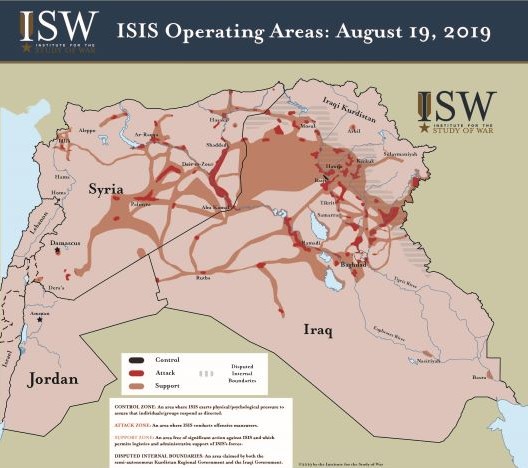
The ISIS Operating Areas Map was an open-source initiative covering ISIS support, attack, and control zones I created and led between 2018 and 2020 at ISW. The project utilized a graphical database, novel data sources, and spatial analysis to produce a high-fidelity assessment. These maps were featured in major newspapers, like the New York Times, and Inspector General Reports to Congress.

TinyHex

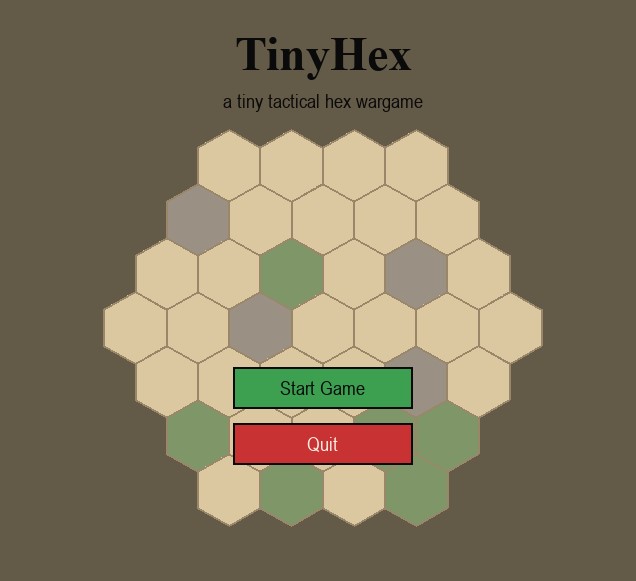
I developed this simple, tactical wargame on the pygame framework. The player competes against an automated adversary which uses reinforcement learning. A random scenario is generated for each play. The player's archers and infantry compete to control the map. Probabilistic adjudication resolves combat and terrain restricts movement and attack. The game can be played in 10 minutes and detailed statistics are tracked in the background which can be downloaded as a csv file for post-game analysis.

Detecting Job Scams Online

Using publicly available information on a standard job-board website, my colleague and I developed an approach to identify fraudulent job postings 95% of the time with 63% percent recall, outperforming a previous benchmark. Our prediction model utilized a Latent Dirichlet Allocation process to conduct abstract topic modeling as well as a synthetic minority oversampling technique to address class imbalance. Our objective was to identify the rare cases of scams on job boards to flag them for content moderators.

NFL Draft Selection Optimization Tool

In this personal project, I built a web crawler to collect hundreds of 2023 NFL mock drafts from sports journalists. I structured and stored all the data with this programatic approach. I use the data to build probability distributions for each player to be selected at each pick in the draft and then use a Monte Carlo approach to find the likelihood that any given player will be available for a team to select at their slotted pick. The tool is designed to help NFL teams optimize their draft selections by providing a probabilistic assessment of player availability.

Data Science Guide

I developed this personal project to serve as a map for navigating data science techniques, processes, and concepts. The large flow chart organizes all approaches as falling within five task-types: predict, infer, detect, optimize, or describe.


I find the right tool for the objective.

But, these are the tools I use most frequently.